Sally Says Speech & Language Therapy — sallysays.co.nz
/v/ Sound Practice — 4–5 years — phrases
This month's goal
To use the sound clearly in short phrases — /v/ sound
Practice goal
5 minutes
3–5 times per week
Remember
Small amounts of practice throughout the week are more helpful than long sessions.
Most families only complete the Core Practice section regularly — that is completely okay.
Core Practice
— Start here5 minutes is enough. Choose 1–2 activities at a time. Keep it playful — you do not need perfect speech.
How to make the /v/ sound
The /v/ sound is made by resting your top teeth lightly on your bottom lip and letting your voice hum through. It feels a little tickly! You can help your child feel it by putting their hand on their throat to feel the buzz, or on their bottom lip to feel the air.
Top teeth rest gently on the bottom lip. Voice is switched on. A gentle stream of air buzzes through.
👄 Top teeth on bottom lip. Voice on. Feel the buzz.
Practice words
~ 2 minsPractice sentences
~ 3 minsBig red van.
Blue vest on.
Pretty violet flower.
Hot volcano erupting.
Soft velvet ribbon.
Optional Extra Practice
If your child is enjoying the practice, try one of these extra activities.
🎧 Listening Challenge
Say each pair of words out loud to your child. Ask them to hold up one finger for the first word and two fingers for the second. This helps them tune their ears into the difference between /v/ and /b/ — sounds that are often mixed up at this age.
After each pair, you can ask: 'Did those sound the same or different?' No need for your child to say the words — just listening is great practice.
🔤 Sound Sorting
Read each word aloud slowly. Ask your child to put words with the /v/ sound on one side (maybe a green mat or bowl) and words without it on the other. Your child can point or sort picture cards — no need to say the words out loud unless they want to.
Has /v/
Does not
❓ Quiz
Which one has the /v/ sound? 'Van' or 'pan'?
Answer: Van
Point to the picture that starts with /v/: a vest or a nest?
Answer: Vest
I'll say two words — clap when you hear the /v/ one: 'bat' or 'vat'?
Answer: Vat
✅ This week my child…
Fun Challenges
These are just for fun — choose the ones your child would enjoy.
🏃 Jump for /v/
Say a list of words out loud — some with /v/, some without. Every time your child hears a /v/ word, they jump up! Try: 'cat… van… sock… vest… tree… vine… cup… vase.' Go slowly at first, then speed up for extra fun.
🏆 Weekly Challenge
This week, go on a /v/ sound hunt during a walk or car ride. Every time someone spots something that has the /v/ sound — like a van, a vine, or a vegetable at the shop — give it a thumbs up. See how many you can find before you get home!
🤔 Riddle
Clue 1: I carry things from place to place. I drive on roads and I'm bigger than a car.
Clue 2: You might see me making deliveries. I start with the /v/ sound.
Answer: Van
🔢 Maths With Sounds
There are 3 vases on the table. Mum puts 2 more vases there. How many vases are there now?
Answer: 5 vases
A van has 4 wheels. Another van has 4 wheels. How many wheels altogether?
Answer: 8 wheels
There are 5 violets in a bunch. Dad picks 2 more. How many violets now?
Answer: 7 violets
Take Home Game
— Once the worksheet is doneA fun way to keep practising — use a game you already have at home, or the suggested substitute.
🎲 Roll and Say
~ 5–10 minsWhat you need
A dice, and the practice word cards from this sheet (write each word on a small piece of paper or card).
How to play
Spread the word cards face up on the table. Your child rolls the dice, counts the dots, and picks up that many word cards. For each card they pick up, say the phrase together — for example, 'big van' or 'soft vest'. Take turns rolling so it feels like a game, not a task.
If your child finds it tricky, you say the phrase first and invite them to join in. If they're flying, try adding a describing word: 'fast blue van' or 'warm soft vest'.
Don't have it? No dice? Use a spinner made from paper, or simply take turns picking a card from a face-down pile.
Everyday Life Ideas
Speech practice can happen anywhere, anytime. You don't need to stop and “do therapy” — simply model the sound naturally during everyday conversations.
- •At the supermarket, ask your child to spot things starting with /v/ — vegetables are a great one. Say the word together as you pop it in the trolley: 'big heavy vege!'
- •During a car ride, play a simple I-Spy for /v/ sounds — 'I spy with my little eye… a van!' You say it first so your child hears the sound clearly.
- •At mealtimes, name vegetables on the plate together using a short phrase — 'green veggies', 'yummy vegetables'. Keeping it light and chatty works better than formal practice.
- •If your child says 'ban' instead of 'van', just respond naturally: 'Yes, that van is really fast!' You're giving them a gentle model without any pressure to try again.
💡 Technique tip — Modelling
When your child says a /v/ word without the right sound — like 'ban' instead of 'van' — simply say the word correctly yourself in a natural, relaxed way. No need to point it out or ask them to try again. Hearing the right sound in context is what builds the pattern over time.
“Child: 'Look, a big ban!' You: 'Oh yes, a big van! I wonder where it's going.'”
Even hearing the sound regularly helps learning. Your child does not need to get every word perfect — short, playful practice is often most effective.
Sally Says Speech & Language Therapy
Flashcards
Print this page and cut along the dashed lines.

van
initial
vest
initial
vase
initial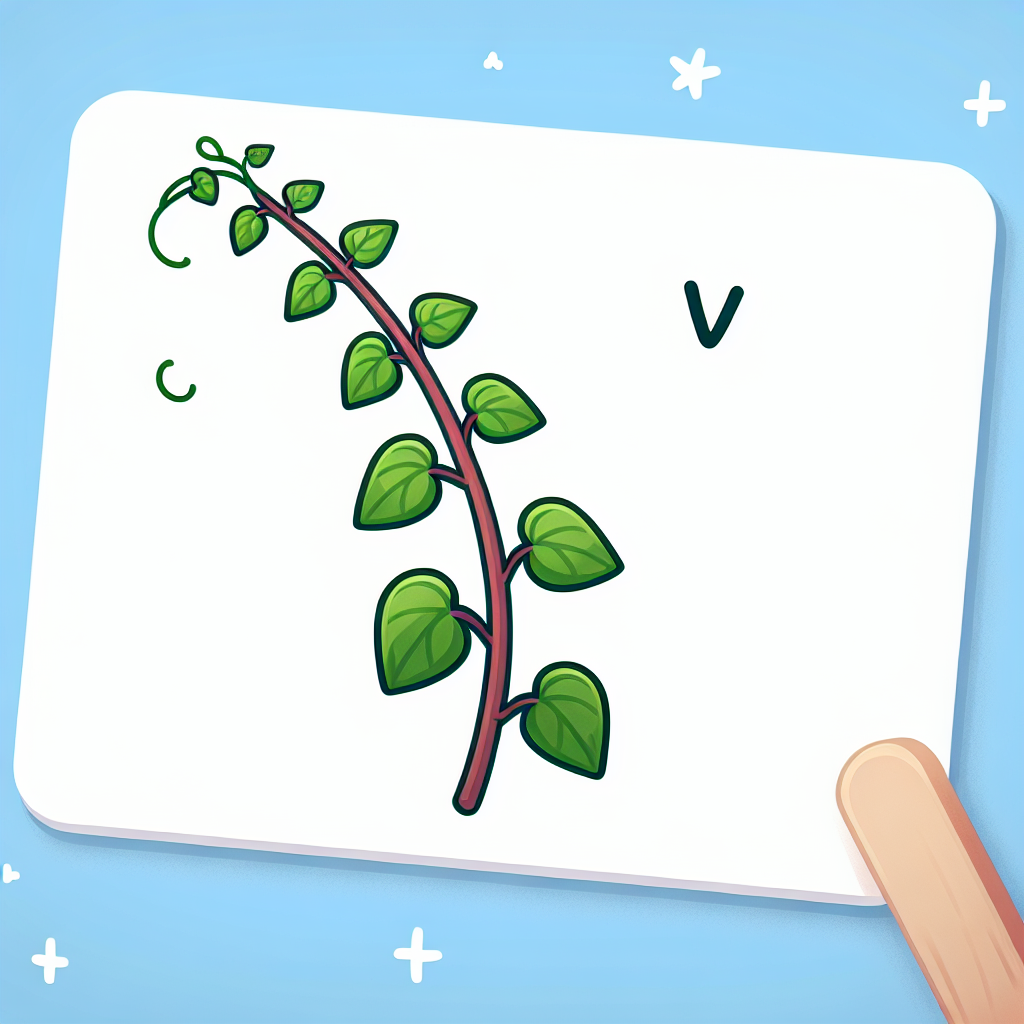
vine
initial
violet
initial
velvet
medial
volcano
initial
village
initial
over
medial
river
medial
glove
final
stove
finalWant a personalised resource?
These are sample resources. Our SLTs create tailored worksheets specific to your child's goals, sounds, and progress.
Join the Waitlist